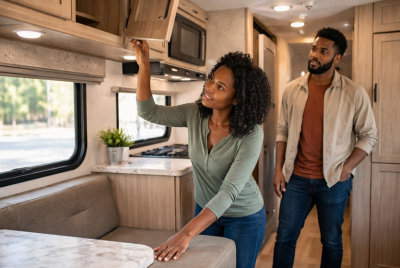
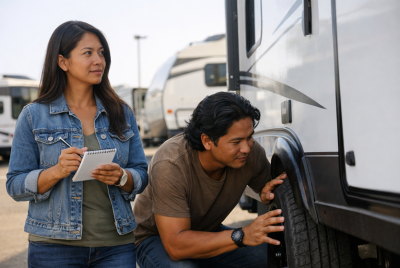
Buying an RV without a careful inspection is one of the easiest ways to turn excitement…
Mistakes To Avoid When Buying Your First RV
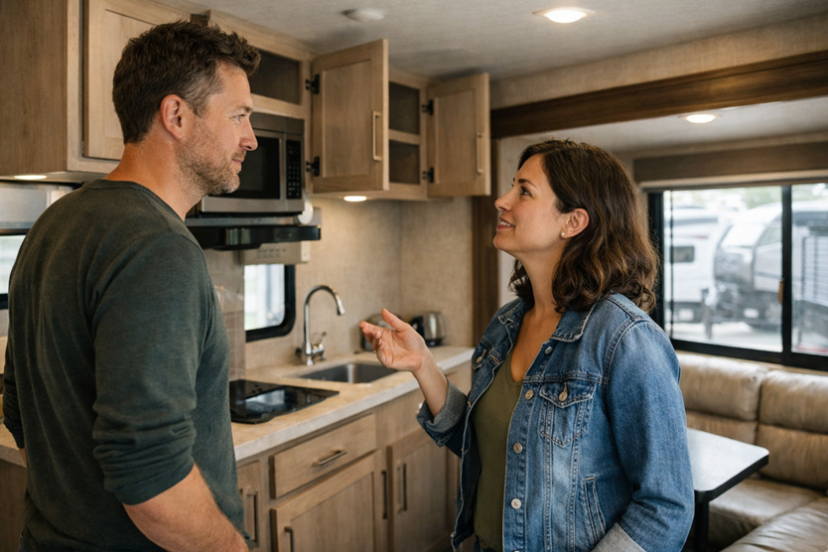
Buying your first RV usually goes wrong in one of two ways: people either buy too much RV for the way they actually travel, or they focus so heavily on looks and features that they miss the practical realities of towing, parking, maintenance, storage, and everyday comfort. The smartest first RV is usually not the flashiest one. It is the one that fits your real travel habits, your budget, and your comfort level with setup, driving, and upkeep.
A lot of first-time buyers picture freedom, weekend getaways, scenic campsites, and easy road trips. That part is real. But the buying stage can get surprisingly overwhelming fast. Floor plans start to blur together, sales language makes everything sound essential, and it becomes easy to assume that bigger, newer, or more upgraded automatically means better. For many new RVers, that is where avoidable mistakes begin.
The first RV mistake is buying for a fantasy version of your life
One of the most common problems is shopping for the RV you imagine using in a perfect scenario instead of the one you will actually use most of the time.
Maybe you picture long family road trips across multiple states, but in reality you are more likely to take short weekend outings a few hours from home. Maybe you assume you need sleeping space for eight because the bunkhouse looks useful, but most trips will be with just one or two people. Maybe you think a larger rig will feel more comfortable, but you are already nervous about driving, backing in, towing, or fitting into campsites.
Your first RV should match your real habits, not your most ambitious daydreams. It is fine to think ahead, but first-time buyers often create stress for themselves by choosing an RV built around occasional possibilities rather than normal use.
Size feels exciting on the lot and different at the campground
A larger RV can seem like an obvious upgrade when you are standing inside it. More room, more storage, more seating, more sleeping space. But size affects almost everything else too.
A bigger rig may limit where you can camp, increase fuel costs, require a more capable tow vehicle, make setup more intimidating, and add more systems to maintain. Even inside the RV, more square footage does not always mean better flow. Some layouts feel roomy during a walkthrough but become awkward in daily use.
This is one of the most useful mindset shifts for first-time buyers: comfort is not just about interior space. It is also about how confident you feel getting the RV to your destination, parking it, leveling it, and living in it without feeling overwhelmed.
Floor plan matters more than flashy features
Many first-time buyers get distracted by cosmetic upgrades, entertainment packages, outdoor kitchens, decorative finishes, or luxury touches that look impressive during the shopping process. Those features are not always bad, but they can distract from the things that affect your experience every single trip.
A practical floor plan usually matters more than premium finishes. Can you move around easily when the slide is in? Is there enough usable kitchen space for the way you cook? Does the bathroom feel workable, not just present? Can you access the bed, fridge, and bathroom during a travel stop? Is there storage where you actually need it?
These details do not sound glamorous, but they shape daily life inside the RV more than a long list of upgrades ever will.
It is easy to underestimate the full cost of ownership
The purchase price is only one part of the decision. First-time buyers often focus so hard on monthly payment or sticker price that they do not fully account for the rest.
Owning an RV also means thinking about insurance, registration, maintenance, repairs, storage, tires, campground fees, fuel, setup gear, sewer and water accessories, batteries, and the occasional surprise expense. Even a well-kept RV can come with learning costs.
This does not mean buying an RV is a bad idea. It just means the wrong RV can feel stressful much faster when the budget only worked on paper. A more modest, manageable RV often creates a better first experience than stretching for something that barely fits financially.
Tow ratings and vehicle limits are not small details
For travel trailers and fifth wheels especially, one of the biggest mistakes is assuming a tow vehicle can handle an RV because the numbers sound close enough. New buyers sometimes hear that a trailer is “half-ton towable” or “lightweight” and treat that as the full answer. It is not.
Real towing confidence depends on more than a headline number. Payload, hitch weight, passengers, cargo, and how comfortably your vehicle handles the load all matter. Even if something is technically within limits, it may still feel stressful or perform poorly in the real world.
This is one of the easiest places for confusion to build because RV shopping language often sounds simpler than the actual decision. The important takeaway is that “can tow” and “can tow well” are not always the same thing.
New does not automatically mean problem-free
Some first-time buyers assume a new RV will spare them from issues, while others assume used is always too risky. In reality, both new and used RVs can be good choices, and both come with tradeoffs.
A new RV may come with warranty support, but that does not guarantee a perfect experience. A used RV may offer better value, but only if it has been cared for and inspected carefully. The bigger mistake is not understanding that RVs are houses on wheels. Movement, weather, vibration, water exposure, and repeated use all create wear over time.
That reality helps explain why first-time buyers often feel surprised after purchase. They expected something closer to a car buying experience, when RV ownership usually requires a more hands-on mindset.
Storage and sleeping capacity can be misleading
On paper, an RV may look like it solves every space problem. It sleeps six. It has exterior compartments. It has overhead cabinets. It has pass-through storage. But usable space and advertised space are not always the same.
Sleeping capacity often reflects what is technically possible, not what feels comfortable. Storage may exist, but it may be oddly shaped, shallow, hard to access, or poorly placed for how you pack. What matters is whether the RV works for your actual routines, not whether the brochure makes it sound flexible.
That is why first-time buyers benefit from asking practical questions instead of just admiring capacity claims. Where do shoes go? Where do dirty clothes go? Where do you put food for a four-day trip? Where do phones charge? Where do jackets, tools, and outdoor gear actually live?
Rushing the decision usually leads to the wrong RV
Buying your first RV can feel oddly emotional. You may worry that the “right one” will disappear, that the season is starting, or that you need to make a decision quickly once you finally find a model you like. That pressure makes it easier to overlook basic mismatches.
The wrong first RV is often not obviously wrong at first. It may feel exciting for a week or two, then gradually frustrating once the real-life details start showing up. Backing into a site feels harder than expected. Storage feels cramped in the wrong places. The bathroom feels too tight. The trailer feels uncomfortable to tow. The setup process feels more draining than fun.
That is why slowing down matters. First-time RV buying usually goes better when the goal is not to “finally buy one,” but to choose one you can realistically enjoy and manage.
What helps first-time buyers make a better decision
A better first RV purchase usually comes from focusing on fit instead of impressiveness.
That means thinking honestly about how often you will travel, who will come with you, how long your trips will be, how comfortable you are with towing or driving, and how much maintenance you are realistically willing to handle. It also means paying attention to the feel of daily use, not just the excitement of the showroom.
One helpful reframe is this: your first RV does not need to solve every future travel scenario. It only needs to serve your current season of RV life well. That takes pressure off the decision and helps you shop with more clarity.
The goal is not the perfect RV but a manageable first experience
The best first RV is often the one that helps you build confidence. It gives you enough comfort to enjoy the trip, enough simplicity to learn the basics, and enough flexibility to discover what matters to you before making a bigger or longer-term decision later.
That is why avoiding mistakes is less about finding secret insider tricks and more about staying grounded. Look past the fantasy. Look past the sales language. Look past the idea that bigger, newer, or more loaded must be better. A first RV should make travel feel more doable, not more complicated.
When the RV fits your real life, the whole experience tends to feel lighter. And that is usually what new RVers are actually looking for in the first place.

More to Explore