Buying your first RV usually goes wrong in one of two ways: people either buy too…
RV Inspection Mistakes To Avoid Before You Buy
Buying an RV without a careful inspection is one of the easiest ways to turn excitement into stress. The biggest mistakes usually are not dramatic or technical. They are the simple oversights that happen when a buyer is distracted by layout, price, appearance, or the pressure to make a decision quickly. A good RV inspection is less about finding perfection and more about noticing signs that the RV has been used, maintained, repaired, or neglected in ways that could affect your ownership experience.
For many buyers, especially first-time buyers, an RV inspection feels confusing because the RV can look clean and still have expensive problems hiding underneath that surface. A unit can smell fresh, show well, and still have water damage, roof issues, worn seals, soft flooring, appliance problems, or maintenance gaps that do not show up in a quick walk-through. That is why inspection mistakes matter so much before you buy. You are not just checking whether an RV looks nice. You are trying to understand whether it is sound, functional, and realistic for the kind of travel you want to do.
Why a nice-looking RV can still be the wrong buy
One of the most common mistakes is assuming that clean means well maintained. A detailed interior, staged decor, and polished exterior can create a strong first impression, but they do not tell you much about the condition of the roof, seals, slide-outs, plumbing, electrical systems, tires, or storage compartments.
RV problems often build slowly. Water intrusion is a good example. By the time staining or bubbling becomes obvious, the issue may have been there for a while. In some RVs, the damage stays hidden behind walls, under flooring, around windows, or inside cabinets. Buyers who focus mostly on appearance often miss the difference between cosmetic freshness and structural soundness.
That does not mean a used RV is a bad idea. It means visual appeal should never carry more weight than condition.
The rush to decide is where buyers miss the most
Another major mistake is inspecting the RV emotionally instead of observationally. This often happens when the floor plan feels perfect, the dealership says inventory moves fast, or the seller makes the opportunity sound rare.
In real life, this feels like walking into an RV, loving the dinette, picturing future trips, and mentally buying it before you have really evaluated it. Once that happens, people start explaining away concerns instead of noticing them clearly.
This matters because RVs combine vehicle elements, home-like systems, and weather exposure in one package. Even a small issue can affect comfort, safety, and repair costs. A rushed inspection does not just increase the odds of missing a problem. It also makes it harder to judge whether a problem is minor, manageable, or a sign of larger neglect.
Water damage is often underestimated
Many buyers think they are mainly looking for obvious leaks. In reality, the more important question is whether water has been getting in over time. That is why one of the biggest inspection mistakes is checking for active dripping but not paying attention to soft spots, staining, warped materials, musty odors, or uneven repairs.
Water issues matter because they can affect far more than appearance. They can damage wood, insulation, subflooring, wall structure, and interior finishes. They can also point to a broader maintenance pattern. An RV with unresolved water intrusion often tells you something about how carefully the entire unit has been cared for.
This is one reason inspection is not just about making a list of defects. It is about noticing patterns. A small stain by itself may not tell the whole story. A stain, soft wall, cracked seal, and patchy repair together tell a much clearer one.
Buyers often pay too little attention to the roof and seals
A lot of people spend most of their inspection time standing inside the RV because that is where the lifestyle appeal is. But some of the most important clues are outside, especially on the roofline, around windows, along seams, and near slide-outs.
This part is easy to overlook because it does not feel exciting. But roof condition and seal integrity are tied closely to long-term ownership headaches. Cracked sealant, uneven patchwork, dried gaskets, and signs of delayed upkeep can all suggest future problems even if the unit seems fine today.
A helpful reframe is this: the interior tells you how the RV feels, but the exterior often tells you how the RV survives.
It is easy to assume everything works because it powers on
One of the more subtle inspection mistakes is giving too much credit to a quick demonstration. A light turning on, a refrigerator humming, or an air conditioner starting up does not always mean the system is working well or consistently.
RVs depend on multiple systems working together. Power, propane, water, waste handling, appliances, climate control, and slide mechanisms all affect everyday usability. If buyers only look for signs of life rather than signs of healthy operation, they can leave with an incomplete picture.
This matters even more because RV ownership is less forgiving than house ownership in some ways. Small failures can disrupt a trip immediately. A problem with a slide, toilet seal, water pump, or electrical connection is not just inconvenient. It can reshape how usable the RV feels from day one.
Tires, age, and maintenance history get ignored more often than buyers realize
A very common mistake is focusing so heavily on the RV itself that buyers overlook age-related wear. Tires are a good example. They may look acceptable at a glance, but age matters along with tread. The same is true for batteries, seals, caulking, hoses, and other components that degrade with time even when use seems light.
Maintenance history also matters more than many buyers expect. The absence of records does not automatically mean the RV is a bad purchase, but it does reduce your visibility into how consistently the RV has been serviced and monitored. Buyers sometimes treat missing documentation as a minor detail when it is actually part of the condition story.
An RV is not only about what you can see in the moment. It is also about what the ownership pattern appears to have been.
The floor plan can distract you from livability problems
A layout can be appealing and still work poorly in practice. Buyers often get so focused on the idea of the RV that they do not inspect how worn, awkward, or fragile certain everyday-use areas feel.
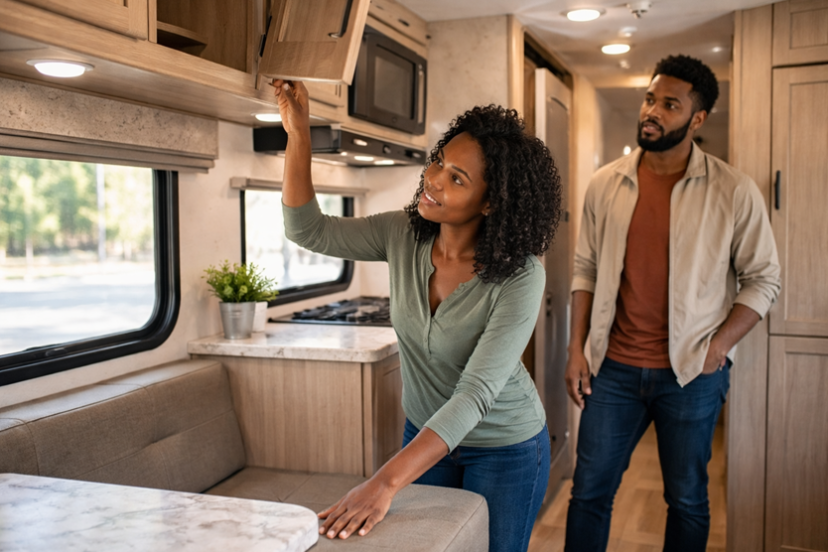
This usually shows up in places like seating, cabinet hardware, storage access, bathroom function, slide clearance, bed access, and kitchen workspace. These may sound like small details, but they shape whether the RV feels easy to use or frustrating after the excitement of buying wears off.
This is especially important because some flaws are not technically defects. They are fit problems. An RV can be in acceptable condition and still not be a good match for your habits, travel style, or comfort needs. Inspection is not only about confirming the RV is sound. It is also about making sure it makes sense for real use.
First-time buyers often think they need to inspect like technicians
This misunderstanding makes the process more intimidating than it needs to be. You do not need to be an expert in every RV system to avoid major inspection mistakes. What helps most is slowing down, noticing patterns, and not letting appearance or excitement answer questions that condition should answer.
A grounded inspection mindset is less about mastering technical language and more about staying curious. Why does this area feel soft? Why does this repair look uneven? Why is there a smell in this compartment? Why do these seals look older than expected? Why is the seller vague about maintenance?
Those kinds of questions often do more to protect a buyer than trying to sound highly technical.
The most expensive mistake is confusing reassurance with clarity
Sometimes buyers leave an inspection feeling better simply because someone was friendly, confident, or casual about concerns. But reassurance is not the same thing as clarity. A calm seller or polished walk-through does not reduce the importance of what you observe.
That is one of the reasons RV inspection mistakes are so common. People are often not careless. They are simply trying to reduce uncertainty, and confidence from the other side can feel like a substitute for real answers.
A better approach is to let the RV speak through its condition. Look for consistency between what you are told, what you see, and how the unit feels. When those things do not line up, that mismatch matters.
A better inspection mindset before you commit
The goal before buying is not to prove that an RV is flawless. It is to notice enough to make a calm, informed decision. Most costly inspection mistakes happen when buyers rush, rely too much on appearance, underestimate water and seal issues, overlook age-related wear, or let a good layout overpower practical judgment.
A thoughtful inspection gives you something more valuable than excitement. It gives you context. And that context helps you decide whether you are buying a workable RV with manageable imperfections or stepping into problems that will follow you long after the purchase.
When you treat the inspection as a reality check instead of a formality, you give yourself a much better chance of buying with confidence rather than recovering from surprises later.

More to Explore