Buying your first RV usually goes wrong in one of two ways: people either buy too…
Budget Mistakes To Avoid When Buying An RV
Buying an RV on a budget is not just about finding the lowest sticker price. The most common budget mistake is focusing too much on the purchase price and not enough on the total cost of getting the RV road-ready, livable, towable, insurable, and maintainable. A cheap RV can become expensive very quickly if it needs repairs, upgrades, new tires, weight-related vehicle changes, or basic setup gear you did not plan for.
This is where many buyers get caught off guard. They start with a number that feels manageable, find a unit that seems close enough, and assume the hard part is over once the sale is done. But in real RV life, the purchase is only one part of the budget. Registration, insurance, inspections, storage, maintenance, towing compatibility, and immediate fixes can all show up right after you bring it home.
A budget-minded RV purchase can still be a smart purchase. The key is understanding where people accidentally under-budget, overbuy, or rush into a unit that looks affordable on paper but is harder to own in practice.
The cheapest RV is not always the most affordable one
A low asking price can feel like a win, especially if you are trying to stay within a strict number. But affordability is really about ownership cost, not just entry cost.
An older motorhome with deferred maintenance may cost less upfront but require expensive tire replacement, roof resealing, appliance work, battery replacement, or water damage repair. A travel trailer with a tempting price may still require a brake controller, hitch setup, towing mirrors, suspension help, or even a different tow vehicle to use safely and comfortably.
This is one of the biggest mindset shifts for first-time buyers: the “deal” is not the price alone. The deal is whether the RV fits your full budget without creating strain immediately after purchase.
When the monthly payment hides the real problem
Another common mistake is shopping by monthly payment instead of full ownership cost. A payment can make almost any RV feel more manageable in the moment, especially when stretched over a long term. But that can hide the larger financial picture.
A lower monthly payment does not necessarily mean the RV fits your budget well. It may simply mean the cost is being spread out longer while insurance, fuel, maintenance, campground fees, storage, and upgrades still sit outside that payment.
This matters because RV ownership is full of expenses that do not disappear just because financing makes the purchase feel easier. If the payment uses up most of your available budget, the rest of RV life can start to feel tight very quickly.
Buying more RV than your real travel style needs
It is easy to imagine future trips in the biggest, nicest, most feature-packed version of RV life. But budgets often go off track when buyers purchase for an imagined lifestyle rather than the trips they are actually likely to take.
A larger RV may offer more comfort, but it can also increase fuel costs, campground limitations, storage difficulty, maintenance expenses, and setup complexity. More space can be helpful, but more RV also means more systems, more surfaces, more weight, and more things to repair.
This does not mean smaller is always better. It means the better financial choice is often the RV that fits how you travel now, not the one built around every possible someday scenario.
Skipping the “ready to camp” math
Many buyers budget for the RV itself but forget the cost of becoming ready to use it. Even a basic setup often includes several practical purchases that make the RV safer, easier, and more functional.
That might include sewer hoses, freshwater hoses, a water pressure regulator, leveling support, wheel chocks, surge protection, kitchen basics, bedding, power adapters, or replacement items the previous owner did not include. None of these costs may seem huge on their own, but together they can significantly change the first-month budget.
This is especially frustrating for new owners because these are not luxury purchases. They are often the normal tools and accessories that make the RV usable in real campground conditions.
Letting cosmetic appeal override expensive realities
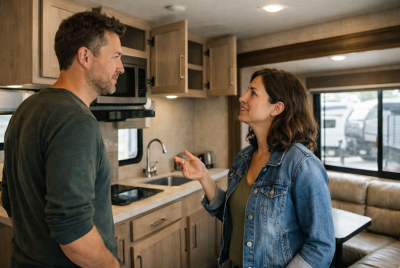
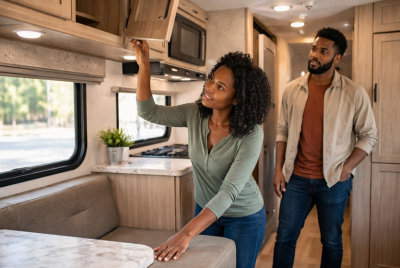
A clean interior, stylish decor, and a nice-looking dinette can make an RV feel like a better buy than it really is. But cosmetic appeal can distract from the things that affect your budget most.
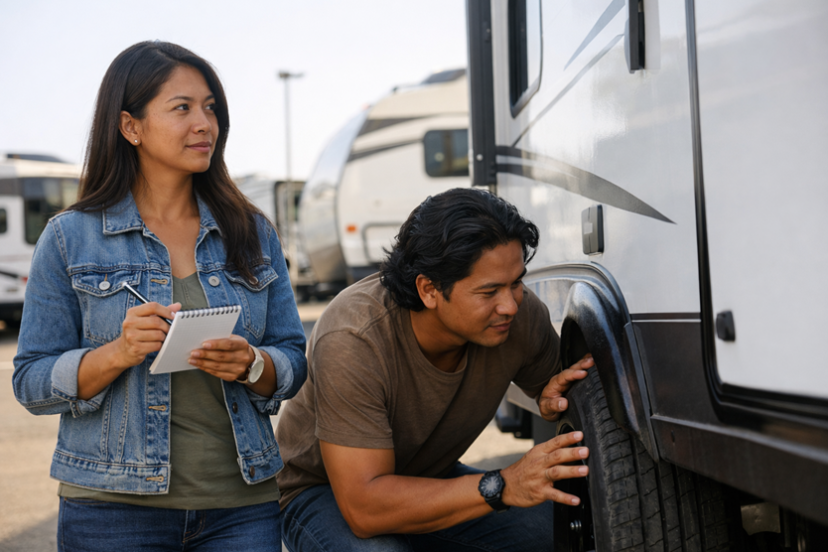
Soft floors, signs of water intrusion, aging tires, worn seals, outdated batteries, damaged roof areas, and neglected appliances matter more than attractive staging. A nice interior can be expensive to repair beneath the surface if the structure or systems have been ignored.
This is one reason budget buyers sometimes make emotional decisions without realizing it. The RV feels right, looks comfortable, and seems like a rare opportunity. But if the expensive problems are hidden behind a polished presentation, the budget damage usually comes later.
Underestimating towing and vehicle-related costs
For towable RVs, one of the most expensive budget mistakes is assuming that if the RV can technically be pulled, the setup is financially simple. In practice, towing compatibility can affect the budget more than expected.
The trailer itself may be within your target price, but the full picture might include a weight-distribution hitch, brake controller, upgraded tires on the tow vehicle, added mirrors, suspension support, or a completely different vehicle. Even when the numbers technically work, a strained towing setup can lead to a stressful driving experience that makes the RV less enjoyable to use.
This is where buyers sometimes confuse “possible” with “practical.” A setup that barely works on paper may still be uncomfortable, limiting, or expensive to improve.
Assuming used always means better value
Used RVs can absolutely offer strong value, but “used” is not the same thing as “budget-friendly” in every case. A poorly maintained used RV can cost more over time than a simpler, better-supported unit that starts at a higher price.
The mistake is not buying used. The mistake is assuming age automatically equals savings. Condition, maintenance history, storage history, tire age, water exposure, and system reliability all matter more than the word “used” by itself.
Sometimes a buyer sees a low used-RV price and feels relief, only to realize later they bought someone else’s neglected maintenance cycle.
Forgetting the costs that continue after the purchase
An RV budget should not stop at the sale. Ownership continues whether you travel often or not.
Insurance, registration, storage, winterizing, routine roof care, tire replacement, battery care, brake service, seal maintenance, and occasional repairs are part of the reality. Even RVs that sit unused still cost money over time. That can surprise buyers who planned carefully for the purchase itself but not for the ongoing responsibility of ownership.
This is an important clarification because many people do not actually have a buying problem. They have a total-ownership planning problem. The purchase may have been possible, but the lifestyle around it was not budgeted clearly enough.
Why budget pressure makes these mistakes more likely
A tight budget often creates decision pressure. Buyers may feel that they need to act quickly before prices rise, before a listing disappears, or before another shopper grabs the unit. That pressure can make almost any compromise feel reasonable in the moment.
When that happens, people often downplay repair risk, ignore future costs, or convince themselves they will “figure out the rest later.” That response is understandable. RV buying has a lot of moving parts, and it is easy to focus on getting through the purchase rather than evaluating the long-term fit.
The problem is that rushed financial decisions tend to follow buyers home. What felt like relief at signing can turn into stress once setup costs, repairs, or towing limitations start showing up.
A better way to think about an RV budget
A practical RV budget is not just a purchase limit. It is a comfort limit. It should leave enough room for the real costs of ownership without making every trip, repair, or campground stay feel financially tense.
That usually means looking at the RV as a whole package: purchase price, expected repairs, towing compatibility, setup gear, insurance, storage, maintenance, and realistic travel costs. When buyers think in that fuller way, they are more likely to choose an RV they can actually enjoy rather than one they are constantly trying to financially recover from.
The goal is not perfection. It is buying with enough clarity that the RV supports your life instead of quietly stressing your budget from the beginning.
In the end, the biggest budget mistakes usually come from treating the RV as the whole expense instead of the starting point of a larger ownership picture. When you understand that early, it becomes much easier to buy with more calm, more realism, and fewer expensive surprises.

More to Explore